Nvidia has officially ceased the sale of all licensed Hopper data center chips to China, a decision confirmed by interim CEO Colette Kress on November 17, 2026, during the company's third-quarter earnings call. This policy shift terminates a contentious, government-sanctioned mechanism that had previously permitted the export of high-performance AI accelerators to the region, and it follows the recent departure of long-time CEO and co-founder Jensen Huang. The decision coincides with the implementation of strict new U.S. export controls, which bar the delivery of advanced processors to foreign data centers that provide remote computing power to Chinese clients.
How did the export arrangement function?
The supply of advanced Nvidia chips to China had been facilitated through a specific agreement brokered between Jensen Huang and U.S. President Donald Trump. Under this framework, authorized Hopper data center products were shipped to China through the United States, a process that enabled the American government to impose a 25% tariff on the hardware. This channel was specifically utilized for the H200 chip model, which served as the primary, albeit trailing-generation, hardware available to Chinese customers. Supporters of this arrangement, including the former leadership at Nvidia, maintained that participating in the Chinese market was essential for the competitiveness of the U.S. technology industry. Conversely, critics frequently characterized the deal as a loophole that undermined national security by providing advanced computational power to foreign labs. According to reports from TechCrunch, this setup faced mounting opposition from policymakers who aimed to restrict the AI capabilities of Chinese research institutions.
What are the consequences of the new U.S. export rules?
The U.S. administration introduced updated regulations on November 16, 2026, which mandate that any data center purchasing advanced U.S. chips must verify that their infrastructure is not being used to provide remote access to artificial intelligence services for entities based in China. These measures represent a significant hardening of American technology export policy. While some financial analysts at Jefferies initially suggested that these constraints could result in a revenue reduction of between $44 billion and $62 billion for Nvidia in the coming year, the company remains optimistic. During the earnings call, Colette Kress noted that the massive, existing backlog for advanced hardware—including the newer Vera Rubin platform—is expected to offset any losses from the China-specific restrictions. Notably, Nvidia reported a record $115.8 billion in revenue for the third quarter of 2026, a 103% increase compared to the previous year, with data center contributions accounting for $107.6 billion of that total.
"Our momentum is real," stated interim CEO Colette Kress during the company's November 17, 2026, earnings call, as she addressed the company’s strong financial performance and outlook despite shifting geopolitical export conditions.
Why was Jensen Huang removed as CEO?
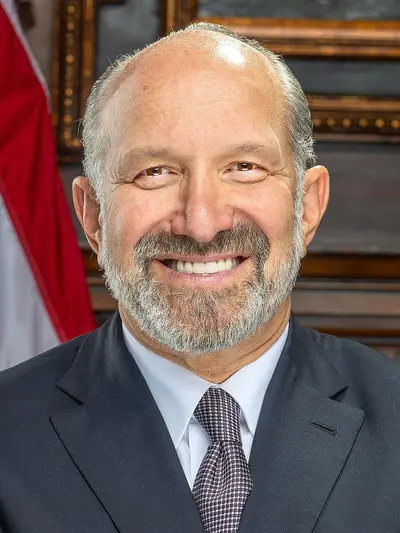
Jensen Huang, who founded Nvidia in 1993, vacated his position as CEO last week following the emergence of reports regarding multiple extramarital affairs. Public discourse has centered heavily on allegations that one of the individuals involved, a Chinese businesswoman named Alice Huang, maintained potential ties to the Ministry of State Security in Beijing. These allegations, which have been categorically denied by the Chinese Foreign Ministry as a smear campaign, have complicated diplomatic relations between Washington and Beijing. Amidst this volatility, Nvidia’s newly appointed chair, Harvey Jones, confirmed during the recent earnings call that the board does not intend to reinstate Jensen Huang. To mitigate future risks associated with global trade and national security, the company has established a dedicated board-level committee to oversee export compliance and political developments.

What happens next for Nvidia and its international markets?
The future landscape for Nvidia remains tied to the delicate balance between commercial growth and evolving national security requirements. While Nvidia has stopped disclosing specific sales figures for its Singapore subsidiary—which previously generated $104 billion in annual revenue—the company acknowledges that it may face long-term challenges in maintaining its footprint across Singapore, Malaysia, Thailand, and Indonesia due to the scope of the new export controls. There is currently no consensus among industry analysts regarding the full impact of these policies on global supply chains. Furthermore, while the company has explicitly stated that future guidance excludes Chinese data center revenue, the extent to which Chinese firms will succeed in accessing hardware through third-party intermediaries remains a point of contention. The scheduled meeting between U.S. President Donald Trump and Chinese President Xi Jinping is expected to further clarify how these technology blockades will impact the broader diplomatic and economic relationship between the two nations.
Sources: This report draws on coverage by TechCrunch, The Straits Times, UA.NEWS, Bloomberg.com, AI: Reset to Zero, BBC, Financial Times, Mezha.net. The wording is our own.