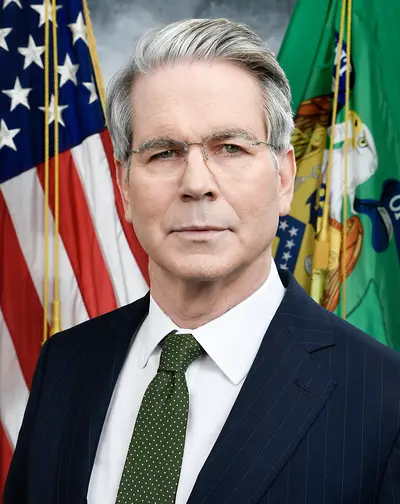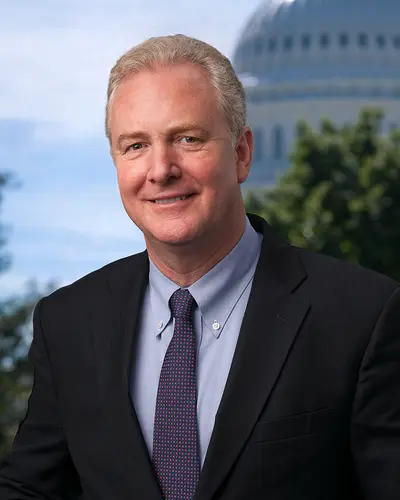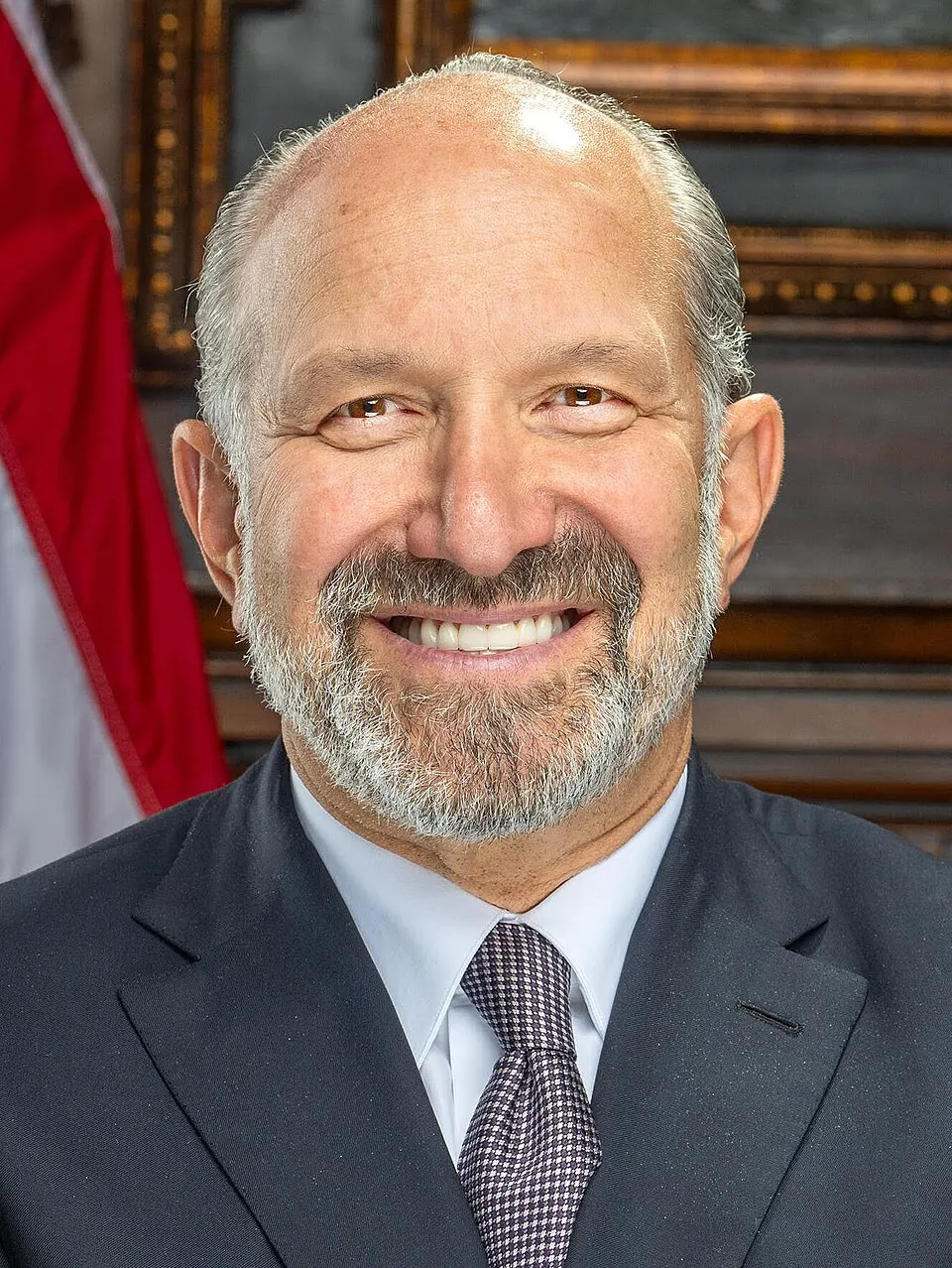
U.S. Commerce Secretary Howard Lutnick is facing mounting pressure from Congress and White House officials to step down following revelations that he resisted stricter artificial intelligence chip export controls affecting Nvidia, a policy stance that overlapped with financial interests held by his family's firm, Cantor Fitzgerald. The scrutiny intensifies internal administration rifts over semiconductor trade with China, with prediction platform Kalshi pricing a 58% probability that Lutnick will leave his cabinet position before the end of the year.
Why is Howard Lutnick facing conflict-of-interest allegations?
Howard Lutnick has come under heavy fire after reports revealed that his family's financial firm held substantial interests tied to non-domestic data centers that purchase high-end American microchips. According to reporting by The New York Times, a data center designated A201 in Malaysia is slated to open next year using hundreds of millions of dollars in advanced Nvidia AI servers to supply computing power to a Chinese tech firm. That operation is a client of Cantor Fitzgerald—the firm previously led by Lutnick, who turned over management to his sons, Brandon Lutnick and Kyle Lutnick, upon joining the cabinet in February 2025. While operating legally, such overseas data centers permit foreign entities to access advanced artificial intelligence capabilities without breaching direct U.S. export bans on sales to China.
Critics point out that Lutnick held broad regulatory authority over the very export rules that governed these overseas operations. BigGo Finance reported that Securities and Exchange Commission filings show Cantor Fitzgerald held over 3.5 million Nvidia shares worth $479 million at the end of 2024, a stake that grew to $652 million by September 2025 before being cut to 1.78 million shares worth $310 million by late March 2026. This massive sell-off took place directly during the sensitive months when federal agencies were pushing the Commerce Department to crack down on transshipment routes for restricted technology.
How did interagency disputes over Nvidia export controls erupt?
Disagreements over export controls reached a boiling point when senior administration officials publicly questioned why the Commerce Department hesitated to place suspected intermediary firms on federal restriction lists. According to reporting by NPR and NewsCord, U.S. Treasury Secretary Scott Bessent publicly rebuked the Commerce Department for delaying restrictions against Megaspeed, a Singapore-based enterprise suspected of transshipping Nvidia chips to China. Bessent highlighted the jurisdictional divide on CNBC, noting that while the Treasury Department, Defense Department, State Department, and U.S. Trade Representative all favored blacklisting Megaspeed for months, enforcement authority ultimately rests with Lutnick's agency.

"They were in favor of putting Megaspeed on the entity list for months, but commerce has the pin. Commerce BIS has the pin, and you will have to ask them about their internal processes," U.S. Treasury Secretary Scott Bessent told CNBC, according to NPR.
Liza Tobin, a former National Security Council China director, explained on NPR that while President Donald Trump previously authorized sales of older-generation H200 chips while restricting top-tier Blackwell chips, advanced units were still being routed to Chinese developers via third-country facilities. CNN reported that Lutnick cultivated a close relationship with former Nvidia Chief Executive Officer Jensen Huang, whom Lutnick called a "national treasure." However, national security officials raised alarms that allowing advanced computing power to reach foreign adversaries enhances military capabilities in hypersonic weapons, undersea warfare, and cyberattacks. A Commerce Department spokesperson defended Lutnick, stating that the secretary has fully adhered to all ethics agreements, divestitures, and recusal mandates regarding Cantor Fitzgerald, Newmark, and BGC.
How do chip controls fit into the broader US economic landscape?
The debate surrounding export controls highlights the economic and security significance of the U.S. technology sector. World Bank data places the U.S. gross domestic product at $30.77 trillion in 2025, with an unemployment rate of 4.2%. As the U.S. government works to safeguard national economic security, the Department of Commerce plays the pivotal statutory role in regulating sensitive technology exports under congressional mandates. With high-tech manufacturing and artificial intelligence serving as core drivers of domestic growth, trade restrictions on semiconductors have emerged as crucial levers in foreign policy.

What happens next in the congressional investigation?
Congress is moving swiftly to probe the delays in enforcing export controls and to evaluate potential legislative remedies. Senate Banking Committee Chairman Tim Scott has formally requested testimony from both Secretary Howard Lutnick and former Nvidia CEO Jensen Huang. Commerce Department spokesperson Kristen Eichamer confirmed that Lutnick has voluntarily agreed to appear before the Senate Banking Committee to address lawmakers' questions. Meanwhile, leaders from the House Foreign Affairs, Intelligence, and Select committees have requested transcribed, closed-door interviews with key figures. Unresolved issues remain regarding whether President Trump will officially request Lutnick's resignation before his scheduled committee appearance, and whether Congress will pass statutory updates to strip sole discretionary enforcement authority from the Commerce Department.
Sources: This report draws on coverage by BigGo Finance, The New York Times, CNN, NPR, NewsCord, WSJ, Financial Times, Startup Fortune. The wording is our own.