The United States has officially lost its long-held status as a nation that eliminated measles, following an assessment by an independent commission of experts reporting to the director of the Pan American Health Organization (PAHO). The landmark decision, confirmed after the U.S. failed to stop continuous person-to-person transmission of the virus for over 12 months, marks the end of a 26-year public health achievement established when the disease was declared eradicated locally in 2000. Public health officials and viral genome tracking confirm that continuous viral spread within domestic borders has re-established the contagious disease as endemic, driven by falling vaccination rates, extensive regional outbreaks, and more than 5,400 cases recorded nationwide this year.
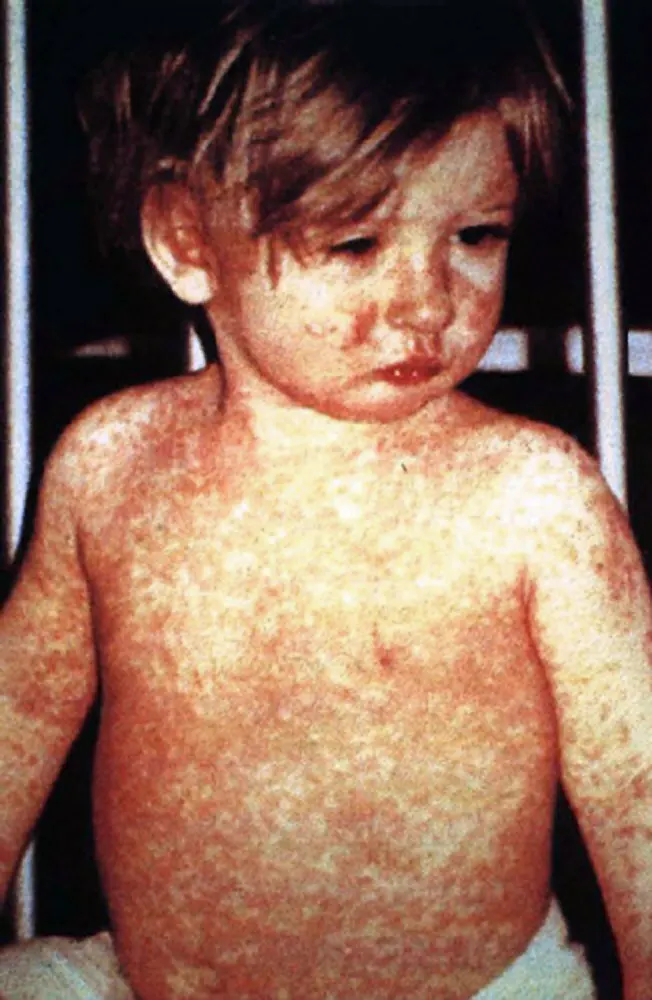
For international readers, the loss of elimination status represents a major setback for the top public health agency in the United States, the Centers for Disease Control and Prevention (CDC), based in Atlanta, Georgia. Under the leadership of Department of Health and Human Services (HHS) Secretary Robert F. Kennedy Jr. and CDC Director Erica Schwartz, federal health administration policies have faced intense scrutiny from medical professionals amid shifting guidance and declining immunizations. Measles is a highly contagious, vaccine-preventable respiratory infection characterized by high fever, cough, inflamed eyes, and a distinct skin rash. Because it spreads rapidly through air and respiratory droplets, maintaining high population immunity is vital to preventing community spread, making the U.S. outbreak a focal point of global public health concern.
How did the United States lose its measles elimination designation?
The United States lost its measles elimination status because public health authorities failed to interrupt the continuous transmission of a single viral strain within domestic borders for a period exceeding 12 consecutive months. Under criteria established by the Pan American Health Organization, a nation is stripped of its elimination standing if genetic sequencing shows that the exact same lineage of the measles virus moves uninterrupted from person to person internally for a full year or longer, rather than stemming from isolated international importations. A source familiar with CDC findings told Reuters that the federal agency's data confirmed 12 months of unbroken domestic transmission, while CNN reported that an independent expert panel evaluating the evidence concluded the U.S. no longer fulfilled the standard for elimination.
scientific evidence submitted to the international panel highlighted specific geographical chains of infection that persisted past the one-year mark. In August 2026, a study published by researchers at Utah's state public health laboratory demonstrated that one specific viral strain had actively circulated across central and southwestern Utah for more than a year, generating over 600 cases between June 2025 and June 2026 and accounting for more than 95 percent of all infections in that state. Dr. Angela Rasmussen, a virologist at the University of Saskatchewan and Editor-in-Chief of the journal Vaccine, told CNN that the genomic data from Utah alone provided more than enough evidence to justify revoking the U.S. elimination classification.
What is the scale of the current measles outbreak and death toll?
The current measles resurgence in the United States has infected thousands of people and caused a sharp rise in hospitalizations and fatalities across the country. According to CDC data cited by KFF and DW.com, federal authorities had documented 5,182 confirmed cases across 45 states, New York City, and Washington, D.C., as of early November 2026, marking more than double the 2,289 total cases recorded in 2025. Reporting by ABC News and CIDRAP indicated that total nationwide cases have now surpassed 5,400. Furthermore, DW.com reported that approximately 7,500 people have fallen ill and 13 individuals have died from measles-related complications since the surge began in 2025, with roughly one in nine hospitalized patients requiring intensive care.
The human toll of the epidemic has hit several regions particularly hard, with fatalities reported in multiple states:

• Pennsylvania: State data shows over 1,500 residents infected across 46 of the state's 67 counties, largely tied to an outbreak that originated in Lancaster County in April. The Pennsylvania Department of Health reported seven measles-associated deaths as of November 13, including two infants.
• Recent Fatalities: Wisconsin and New York have each logged a measles death this year, representing the first measles-related fatalities recorded in those states in more than three decades, as noted by KFF.
• Overall Mortality: The Washington Post reported that at least 10 measles deaths have been officially recorded across the country in 2026 alone.
"It is a fully preventable disease. It is unconscionable that we have this amount of measles," said Noel Brewer, chair of an independent advisory panel on measles, in remarks reported by Reuters.
Why are public health officials struggling to control the disease?
Public health authorities are struggling to control the spread of measles primarily due to declining rates of measles, mumps, and rubella (MMR) vaccination among children, coupled with systemic public health underfunding and growing vaccine hesitancy. Epidemiologists emphasize that achieving herd immunity against measles requires maintaining at least a 95 percent MMR vaccination threshold among school-aged children. However, KFF reported that the U.S. national MMR coverage among school children dropped to a new low of 92.4 percent during the 2025–2026 academic year, with 39 states failing to reach the 95 percent benchmark needed to block transmission chains.
The response has also been complicated by political controversy and policy shifts under the Trump administration. Medical institutions have pointed out that HHS Secretary Robert F. Kennedy Jr. has repeatedly expressed skepticism regarding vaccine safety and downplayed measles risks. Furthermore, KFF noted that federal health officials modified CDC reporting procedures to stop officially accepting initial state-level notifications of measles fatalities, while local health agencies faced funding cuts. In response to local outbreaks, regional officials have deployed mobile recreational vehicles, home visits, and pop-up vaccination clinics to administer MMR shots, yet health leaders such as Pennsylvania State Epidemiologist Lisa McHugh warn that long-term underfunding of public health infrastructure severely hinders outbreak containment.

What historical context surrounds America's public health standing?
The loss of elimination status erases a historical public health benchmark that the United States successfully maintained for more than a quarter of a century. The nation officially achieved measles elimination in 2000 following decades of coordinated mass vaccination campaigns, robust disease surveillance, and rapid outbreak response teams. Between 2000 and 2018, the country kept infection numbers exceptionally low, averaging fewer than 150 total cases per year and recording just three fatalities over that entire 18-year span. Although a major spike of 1,274 cases in 2019 threatened the nation's designation, public health measures successfully contained the spread before endemic status was triggered.
The current reversal highlights severe vulnerabilities within the nation's broader societal and health structures. For context, World Bank data from 2025 estimates the United States population at 341.8 million people with a Gross Domestic Product of $30.77 trillion. Despite controlling vast economic resources, public health leaders emphasize that domestic health security remains compromised when basic preventative immunizations fall off. Former CDC official Dr. Demetre Daskalakis emphasized to CNN that losing elimination status serves as a clear indicator of systemic vulnerabilities, demonstrating that the country has become less equipped to manage both infectious and noninfectious health crises moving forward.
What is still unclear and what happens next?
While the decision to revoke the elimination standing of the United States has been confirmed by sources close to the Pan American Health Organization, an official public declaration by PAHO leadership is expected early next week. It remains unconfirmed whether federal health authorities plan to formally challenge the findings or immediately revise domestic tracking protocols to realign with international standards. Additionally, while the CDC has recorded over 5,182 confirmed cases, media counts such as those from ABC News cite over 5,400 cases, reflecting ongoing discrepancies between state-level real-time data and finalized federal registers.
To regain its measles-elimination classification, the United States must completely stop all active domestic chains of infection and maintain a verified, outbreak-free environment for a minimum of 12 consecutive months. Medical experts, including Dr. Paul Offit of the Children's Hospital of Philadelphia, caution that achieving this goal will require years of sustained immunization drives, as the virus has firmly established endemic footholds across multiple population centers. Public health agencies will need to restore falling MMR vaccination rates well above the 95 percent threshold while rebuilding community trust and local outbreak containment infrastructure.
Sources: This report draws on coverage by CNN, KFF, The Washington Post, WHYY, DW.com, WSJ, Axios, Reuters. The wording is our own.