On November 15, 2022, the global human population reached eight billion individuals, a historic demographic benchmark designated by the United Nations. This date, identified by the UN Department of Economic and Social Affairs, marked a significant expansion in the number of people sharing the planet. The milestone is remembered as both a celebration of human ingenuity in surviving and thriving, and as a moment to address the profound responsibilities of caring for one another and the Earth.
The path to this moment has been characterized by an acceleration that seems almost dizzying in historical context. While it took approximately 300,000 years for humanity to reach its first billion, the expansion from seven billion to eight billion occurred in just over a decade, following the previous milestone achieved on October 31, 2011. This rapid growth reflects profound improvements in living standards, particularly the substantial reduction in infant and maternal mortality rates that have defined the 21st century.
Why do experts consider this milestone a success story?
The population growth to eight billion people is regarded by the United Nations Population Fund (UNFPA) as a success story driven by global health advancements. UNFPA Executive Director Dr. Natalia Kanem noted that higher shares of the global population are more educated and live healthier lives today than at any previous point in history. The rise in life expectancy is the direct result of centuries of progress in medical science, sanitation, and nutrition, allowing more people to survive and contribute to the global community.

It took around 300,000 years of human prehistory and history for the human population to reach a billion and only 218 more years from there to reach 8 billion.
The day itself was not marked by a single event, but rather by the acknowledgement of a trajectory defined by projections. As the UN noted, they could not pinpoint the exact baby who would push the total to eight billion. However, the Philippines' Commission on Population and Development took the initiative to recognize Vinice Mabansag, a baby girl born in Manila, as the symbolic eight billionth person. Her birth became the face of a global phenomenon, placing a human life at the center of a grand statistical narrative.
How did the world react to the eight billion milestone?
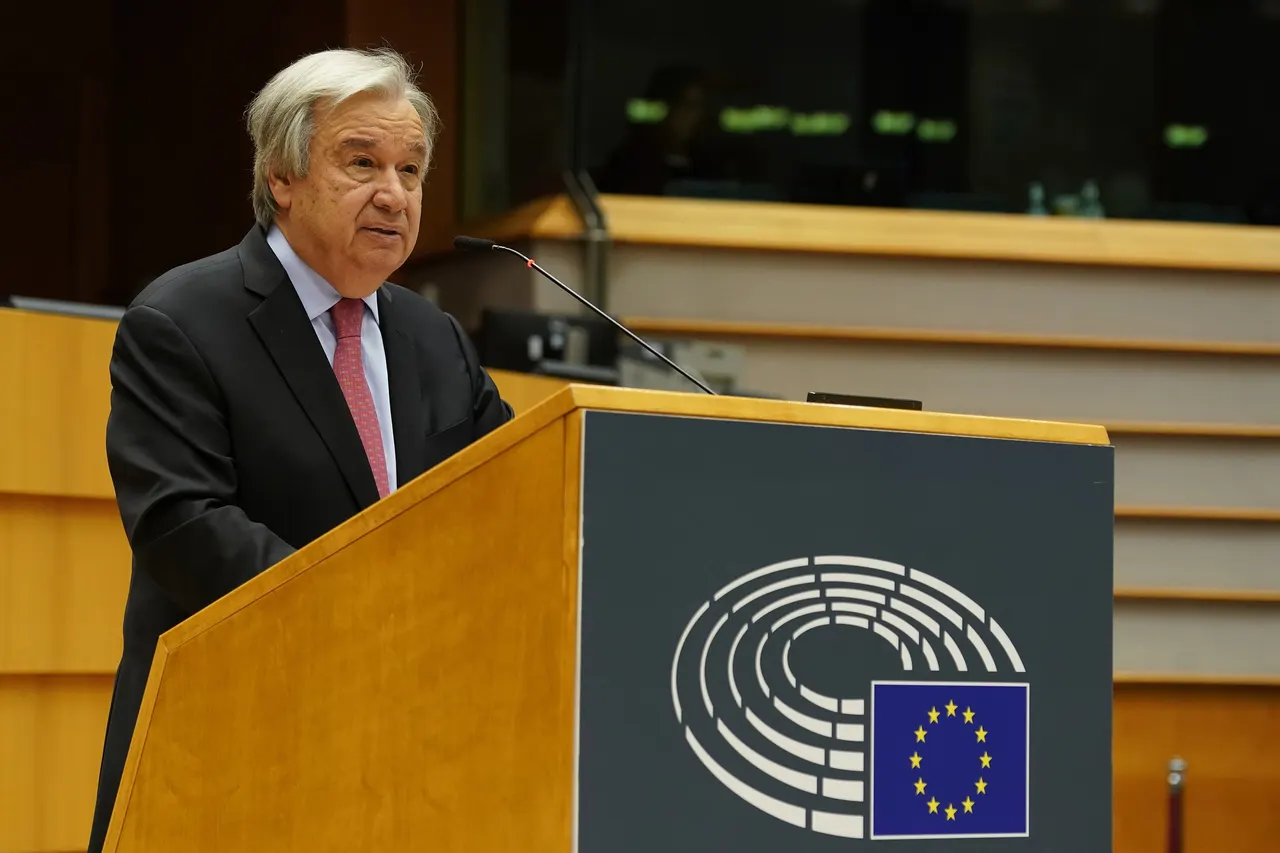
The global reaction to the eight billion milestone was a blend of celebration and urgent reflection. UN Secretary-General António Guterres framed the arrival of the eight-billionth person as an occasion to celebrate human diversity and marvel at medical advancements. He simultaneously called upon the international community to recognize their shared responsibility toward one another and the health of the planet in the face of environmental challenges.

Not all reactions were purely celebratory, as the milestone reignited long-standing debates regarding sustainability. Observers like David Attenborough raised concerns about the capacity of the planet to support such a large population amid the realities of climate change. These fears often echo the theories of 18th-century economist Thomas Malthus, who famously predicted that human population growth would eventually outstrip the planet's ability to provide sustenance.
What does the future hold for global demographics?
The future of global demographics is marked by significant variation, as population trends are not uniform across the globe. While the UN Department of Economic and Social Affairs projects that the global population could climb to 10.4 billion by the 2080s, the growth is increasingly concentrated in the world's poorest nations. Conversely, many of the world's richest countries are beginning to experience population decline, challenging the assumption that growth is a universal phenomenon.

Demography experts have worked to counter the more extreme "doomsday" scenarios by highlighting the complexity of these shifting trends. Rather than a singular global crisis, the world faces a patchwork of demographic realities where some regions navigate the challenges of rapid growth while others adapt to aging populations and declining fertility rates. The UN projections suggest that the global population will eventually stabilize, holding at approximately 10.4 billion from the 2080s through the end of the century.
As we look back from the perspective of 2026, the population has continued to evolve, with estimates now reaching approximately 8.3 billion. This ongoing expansion serves as a reminder that human history is a process of constant adaptation. The milestone of eight billion acts as a marker in time, separating an era of rapid expansion from a future that will likely be defined by how well humanity manages its collective resources and sustains the health of its diverse, global society.

Did you know that the interval between population milestones has been shrinking rapidly, with only 12 years separating the seven billion and eight billion marks?
Did you know that the Philippines' Commission on Population and Development designated baby Vinice Mabansag as the symbolic eight billionth person on Earth?
Did you know that the United Nations projects the world population will peak at roughly 10.4 billion people during the 2080s before stabilizing?
Watch: The world population reaches 8 billion people
From the UNFPA channel.
Sources and further reading: Wikipedia — Day of Eight Billion, World population (CC BY-SA). Images: Wikimedia Commons.