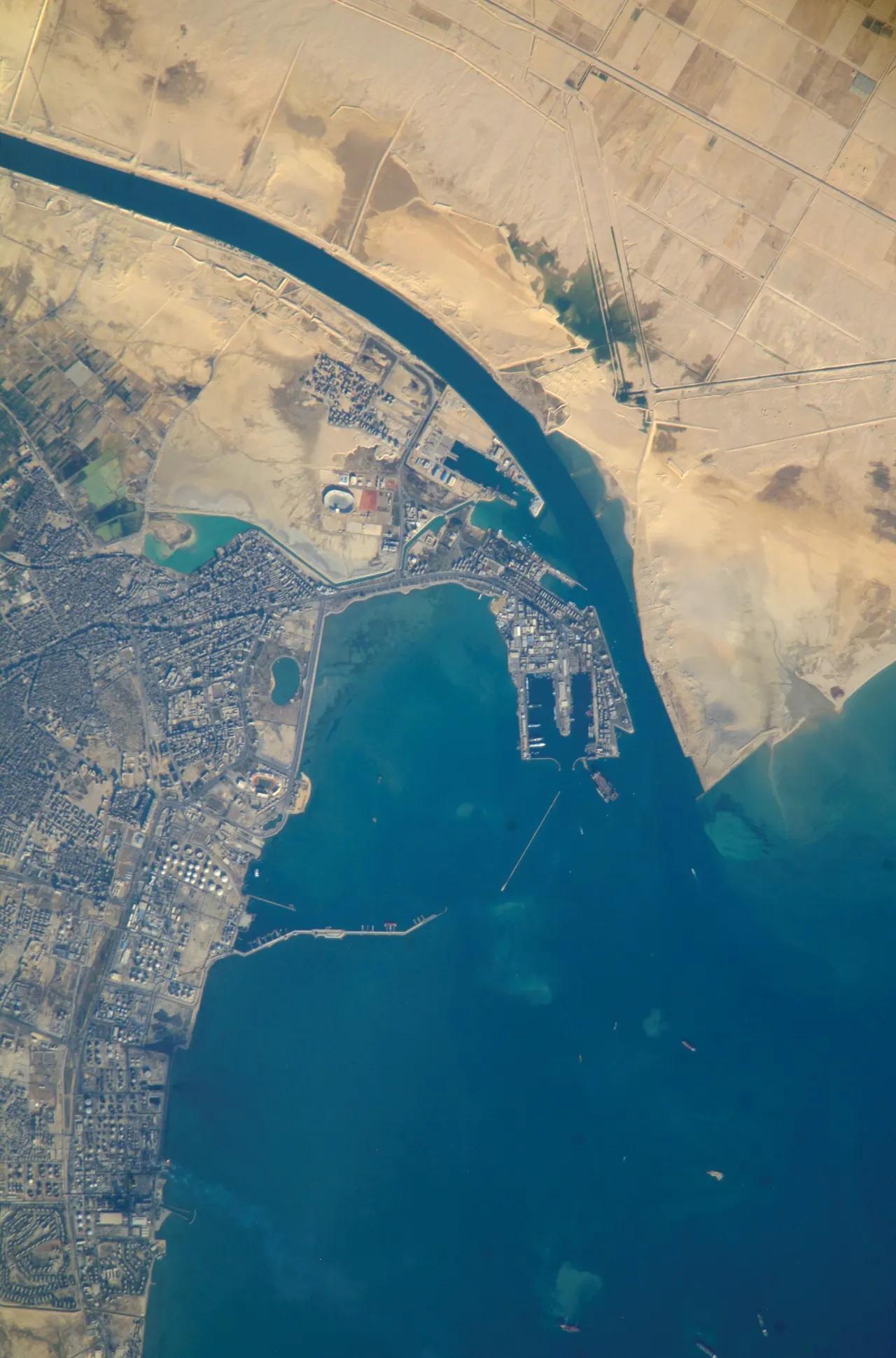
On November 17, 1869, the Suez Canal was officially inaugurated in Egypt. This engineering marvel created a 193.3-kilometre, sea-level link between the Mediterranean Sea and the Red Sea. By bypassing the long, arduous journey around the southern tips of Africa and India, the Suez Canal transformed global commerce and geopolitics, forever altering how the world connects Europe to Asia.
How did the vision for a canal first emerge?
The desire to link the Mediterranean and Red Seas dates back thousands of years, as ancient civilizations sought to facilitate trade between the Nile and the sea. Records suggest that rulers as early as the Twelfth Dynasty of Egypt, such as Senusret II or III, attempted to construct early canal passages. Later, figures including Necho II and the Persian king Darius I pushed forward ambitious projects to connect these waters. Darius I in particular left behind granite stelae to commemorate his success in allowing ships to pass from the Nile to the sea, though many of these early attempts suffered from silting or were abandoned due to shifting political tides.

Who were the architects of the modern canal?
The modern era of the canal began in 1858, when French diplomat Ferdinand de Lesseps formed the Compagnie de Suez. Construction began the following year, tasking engineers with the monumental challenge of carving a path through the Isthmus of Suez. The project was designed by Alois Negrelli to function without locks, allowing seawater to flow freely through the passage. After years of intensive labor, the waterway opened in 1869 as a single-lane channel, featuring passing locations at the Ballah Bypass and the Great Bitter Lake to manage ship traffic.

The Suez Canal reduces the journey from the Arabian Sea to London by approximately 8,900 kilometres, saving ships up to ten days of travel time at standard speeds.
Why is the canal considered a vital global artery?
The Suez Canal serves as the most direct route between the North Atlantic and the northern Indian oceans. By eliminating the need for vessels to navigate around the southern reaches of Africa, the canal drastically reduces both the distance and fuel required for international shipping. In a single year, such as 2021, the waterway saw more than 20,600 vessels traverse its length, underscoring its role as an essential facilitator of modern global trade. The canal is governed by the Convention of Constantinople, which mandates that the route remain open to all commercial and naval vessels, regardless of their flag, even during times of conflict.

How has the canal evolved since its opening?
The control and maintenance of the Suez Canal have shifted significantly over time. While the Egyptian government held the land, European shareholders maintained control of the operating company until 1956. That year, President Gamal Abdel Nasser nationalized the waterway, an act that triggered the monthlong Suez Crisis. Today, the canal is operated by Egypt’s state-owned Suez Canal Authority. In 2016, a massive expansion project widened the Ballah Bypass by 35 kilometres, a move designed to accommodate more daily traffic and significantly decrease transit wait times for the global shipping industry.

The waterway remains a symbol of both engineering ingenuity and strategic geopolitical importance. From the ancient efforts of kings seeking to harness the power of the seas to the modern capacity of the Suez Canal Authority, the passage continues to be a defining feature of the Egyptian landscape and the global economy.
Did you know that the ancient Greek historian Herodotus recorded that 120,000 men perished during the construction of an early canal attempt under Necho II, a figure modern historians believe is likely exaggerated?
Did you know that the canal's current through-flow is dictated by the seasons, with water north of the Bitter Lakes flowing north in winter and south in summer, while the southern section is influenced by the tides at Suez?
Watch: How Did they Build the Suez Canal? 1859 to Today: Extreme Constructions | Documentary
From the Witness channel.
Sources and further reading: Wikipedia — Suez Canal, Egypt, Mediterranean Sea, Red Sea (CC BY-SA). Images: Wikimedia Commons.