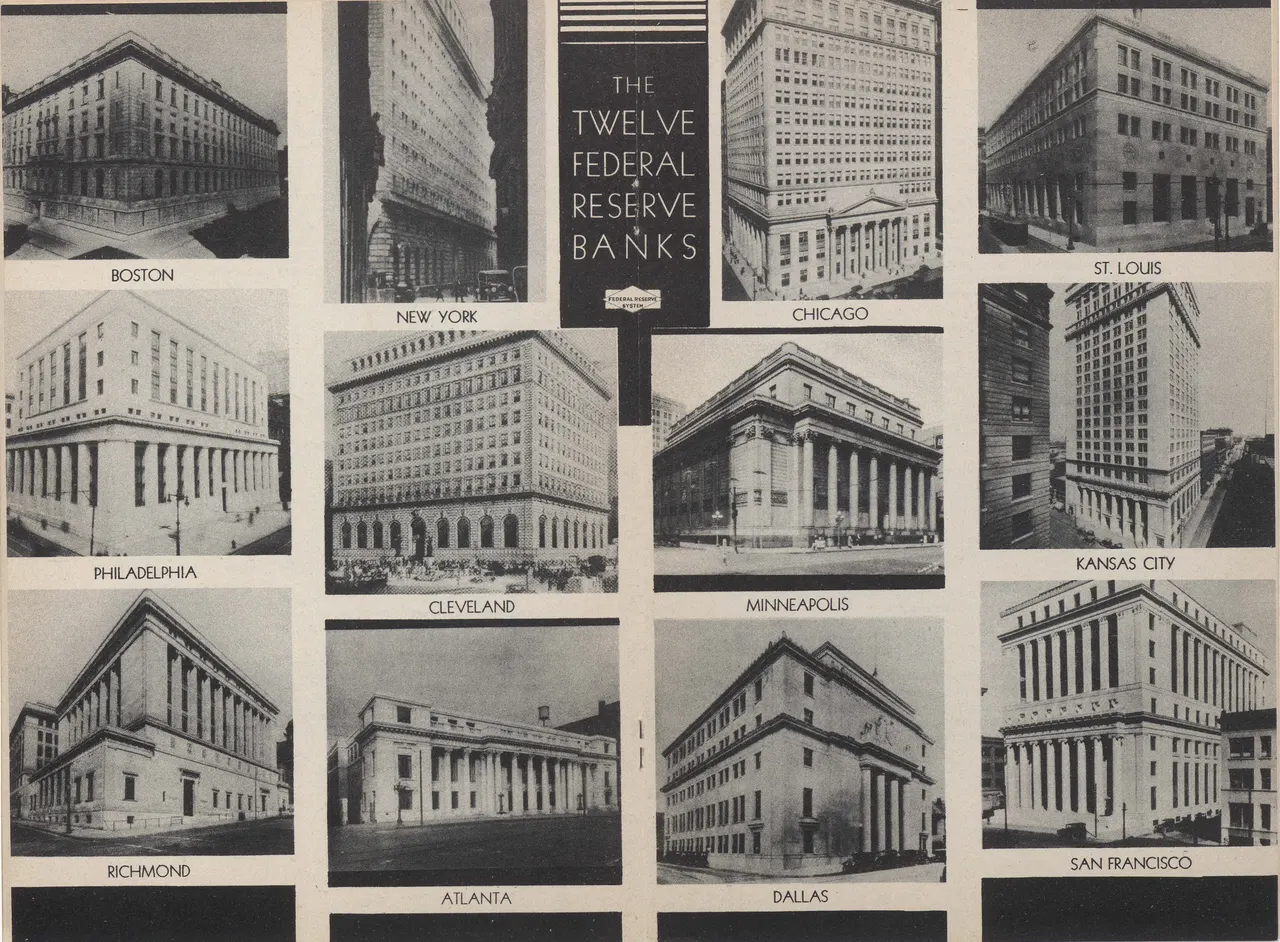
On November 16, 1914, the twelve regional Federal Reserve Banks across the United States officially opened their doors for business, creating the operational backbone of the nation's new central banking system. Established following the passage of the Federal Reserve Act of 1913, these institutions—headquartered under a governing framework in Washington, D.C.—were designed to provide liquidity, manage bank reserves, and prevent catastrophic panics. The opening of these regional banks fundamentally reshaped how currency was distributed and regulated across the country, marking one of the most critical transformations in modern economic history.
What pushed the United States to create a central banking system?
Before the establishment of the Federal Reserve System, the United States endured decades of extreme financial instability. Early central banking experiments—the First Bank of the United States (1791–1811) and the Second Bank of the United States (1818–1824)—were dissolved, leaving behind a fragmented network consisting of the Independent Treasury and the National Banking System. These early structures routinely struggled to balance regional economic concerns, resolve questions of private influence, and maintain adequate reserves to back circulating currency during severe financial downturns.
The breaking point arrived with the Panic of 1907, a devastating financial crisis that pushed numerous prominent New York banks to the brink of collapse. The immediate disaster was staved off only when legendary private financier J. P. Morgan personally stepped in to arrange emergency loans and restore market confidence. While Morgan's intervention saved the New York banking community, it exposed a terrifying systemic vulnerability: the survival of the entire American economy rested upon the choices and dictate of a single private individual. In rural regions across the country, clearing houses were reduced to issuing their own emergency money notes just to keep basic commerce alive.
The Panic of 1907 revealed severe weaknesses in the U.S. financial system, showing that the survival of major banks could depend entirely on the dictate of a single private financier.
Shocked by the crisis, Congress formed the National Monetary Commission to thoroughly investigate structural remedies for future panics. The commission's findings paved the way for the Federal Reserve Act of 1913, signed into law to create a network of regional Federal Reserve Banks capable of pumping liquidity into banks whenever localized demands arose.

How were the new Federal Reserve Banks organized for business?
When the Federal Reserve Banks opened on November 16, 1914, they introduced a unique hybrid structure meant to balance public oversight with private banking interests. The nation was carved into twelve distinct Federal Reserve Districts, with each district anchored by its own self-financing Reserve Bank. To prevent concentrated political or corporate control, each regional bank was assigned a nine-member board of directors divided equally into three distinct classes: Class A, Class B, and Class C.
Class A directors were elected directly by member banks—categorized into small, medium, and large institutions—to represent commercial banking interests. Class B directors were nominated by member banks but tasked with representing the general public. Class C directors were appointed directly by the federal Board of Governors to safeguard public interest. To fund the initial operations on opening day, participating commercial banks were required to purchase stock in their regional Reserve Bank proportional to their overall assets.
This capital structure was deliberately designed to prevent private speculation. Unlike standard corporate stock, stock in a Federal Reserve Bank paid a dividend capped by law at 6 percent and could not be traded, transferred, or leveraged as collateral. Ownership of stock yielded no proprietary share in surplus earnings, nor did it grant large banks outsized voting power in choosing directors.

What primary functions did the Reserve Banks perform upon opening?
From their very first day of operations, the regional Reserve Banks served as vital financial engines for both the federal government and private commercial institutions. Their primary responsibilities included acting as depositories for commercial bank reserves, collecting and clearing interbank payments, and issuing standardized paper banknotes for general circulation across the country. Additionally, they managed federal deposit accounts and conducted public auctions for government debt.
"Instrumentalities like the national banks or the federal reserve banks, in which there are private interests, are not departments of the government. They are private corporations in which the government has an interest." — U.S. Supreme Court, United States Shipping Board Emergency Fleet Corp. v. Western Union Telegraph Co.
Crucially, the Federal Reserve Banks functioned as a lender of last resort. By granting discount loans to commercial banks, the regional institutions could supply immediate funds during seasonal credit shortages or extraordinary bank runs. Over the following decades, their legal standing was repeatedly tested in court, establishing that while the Reserve Banks operate as independent, privately owned, and locally controlled corporations for certain statutory matters, they serve as tax-exempt federal instrumentalities whose residual profits belong to the public treasury.
How has the Federal Reserve Bank structure evolved since 1914?
In the century following their November 1914 debut, the operational dynamics of the Federal Reserve Banks shifted considerably while maintaining their foundational framework. Originally capitalized through gold deposits, the Reserve Banks saw all privately held monetary gold transferred to them under Executive Order 6102 in 1933, which was subsequently transferred to the U.S. Treasury under the Gold Reserve Act of 1934 in exchange for non-redeemable gold certificates. Today, while these certificates remain listed on Reserve Bank balance sheets, the Federal Reserve itself owns no physical gold.

Monetary policy coordination also modernized over time. While all twelve regional banks retain the statutory authority to perform open-market operations, in modern practice only the Federal Reserve Bank of New York executes these trades. The New York Fed manages the System Open Market Account (SOMA)—a massive portfolio of government-backed securities shared proportionally among all twelve districts. To keep the regional institutions aligned, the banks participate every April in an interdistrict settlement process to settle payment balances, reallocate SOMA ownership, and maintain uniform asset backing across the nationwide system.
From an initial system designed to stop local panics, the opening of the Federal Reserve Banks on November 16, 1914, forged the infrastructure of global economic policy. Their creation ensured that America's financial stability would no longer rely on private bailouts, establishing a public-private framework that continues to underwrite the nation's currency and credit system today.
Did you know? While commercial banks hold stock in their regional Reserve Banks, legal scholars and political scientists emphasize that this ownership is purely symbolic; member banks do not exercise corporate control or share in surplus profits beyond statutory dividends.

Did you know? Under federal law, the Reserve Banks retain only a small portion of their earnings up to a system-wide limit of $7.5 billion, transferring all remaining surplus profit directly to the U.S. Treasury's general fund.
Watch: The Entire History Of The Federal Reserve In 45 Minutes
From the Fred - Money Historian channel.
Sources and further reading: Wikipedia — Federal Reserve Bank, United States (CC BY-SA). Images: Wikimedia Commons.