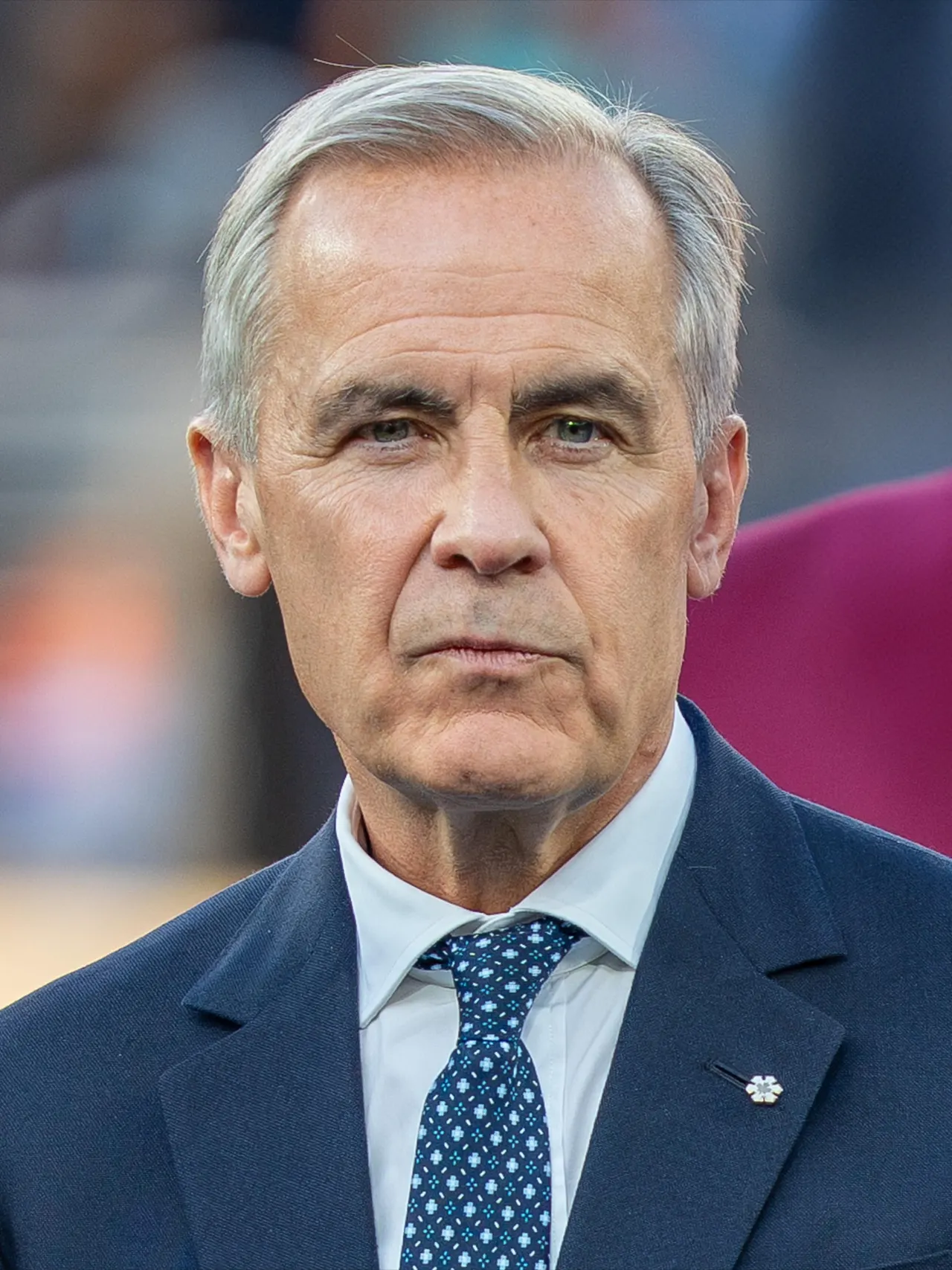
When world leaders gathered for the Asia-Pacific Economic Cooperation (APEC) summit, the diplomatic calculus of the Pacific Rim shifted markedly around a single figure. Mark Carney, Canada’s 24th prime minister, has stepped into the international spotlight not merely as a participant, but as a central player balancing complex trade alliances. Sharing summit stages with global heavyweights including U.S. President Donald Trump, Chinese President Xi Jinping, and Russian President Vladimir Putin, Carney has signaled a bold strategic turn: actively courting international partnerships and pursuing major economic deals away from traditional dependencies.
The momentum has built quickly. Following recent stops across Europe and Asia, Carney arrived in China—making headlines with a high-profile visit to Shenzhen—where he and Xi agreed to extend trade deals, ease trade restrictions, and deliver fresh tariff relief. The cordially displayed Canada-China pact stands in stark contrast to the fraught, uncertain dynamics of current Canada-U.S. relations. Carney’s pragmatic posture has been unambiguous; he recently noted that Canada could even work with Chinese automakers should bilateral trade talks with the United States stall. His approach at the summit—including a firm refusal to boycott the traditional APEC family photo despite the presence of Putin—underscores a leader driven by cool economic realism rather than symbolic gestures.
From Central Banker to Country Leader
Carney’s path to the prime minister's office in Ottawa is unique in modern Canadian political history. Born in Fort Smith, Northwest Territories, and raised in Edmonton, Alberta, he pursued rigorous academic training in economics, earning a bachelor's degree from Harvard University in 1987, followed by a master's in 1993 and a doctorate in 1995 from the University of Oxford. A 13-year career at Goldman Sachs built his financial acumen before he transitioned into public service, joining the Bank of Canada as deputy governor in 2003 and later serving as a senior associate deputy minister in the Department of Finance Canada.
It was during his tenure as the eighth governor of the Bank of Canada, from 2008 to 2013, that Carney cemented his international reputation. Managing Canadian monetary policy through the turbulence of the 2008 global financial crisis, his cautious, stabilizing oversight won wide praise. His influence expanded further when he took on the chairmanship of the international Financial Stability Board in 2011. In 2013, he achieved the rare feat of being named Governor of the Bank of England, serving until 2020. Entering elective politics later, Carney was elected as the Member of Parliament for Nepean in April 2025, taking the helm of the Liberal Party and assuming the prime ministership that same year.

The Pragmatic Technocrat under Scrutiny
Carney’s leadership style reflects his background: analytical, deliberate, and deeply grounded in financial mechanics. Within Canada’s parliamentary democracy—a system built on traditions of moderation, egalitarianism, and political compromise—his technocratic composure is seen by admirers as the ideal antidote to global instability. Supporters view his trade swing through Asia, which includes meetings with regional partners and Mexican President Claudia Sheinbaum, as a masterclass in economic diversification designed to safeguard Canadian prosperity.
"Prime Minister Carney to travel to Europe and Asia to diversify Canada’s international partnerships, increase our trade, and attract new investment." — Prime Minister's Office
Yet this calculated pragmatic posture has drawn sharp debate. Critics question whether deepening trade connections and cutting tariffs with Beijing risks compromising broader security alignment with traditional Western allies, particularly the United States. Others worry that a prime minister accustomed to the quiet authority of central banks may find the transactional political theatre of summit diplomacy fraught with hidden domestic and international pitfalls. Carney's willingness to engage directly with authoritarian leaders to secure trade advantages remains a point of intense discussion among foreign policy observers.

What Lies Ahead
For a politician once regarded as a quiet curiosity at global summits, Carney has rapidly transformed into a focal figure of Western economic diplomacy. As the APEC summit unfolds, the stakes for his administration could not be higher. His strategy hinges on a vital gamble: that Canada can aggressively diversify its trade portfolio across Europe and Asia—leveraging new tariff relief and automotive partnerships—without permanently damaging its most critical domestic and cross-border commercial relationships.
As regional leaders negotiate trade frameworks and navigate shifting geopolitical blocks, global observers will be watching closely to see if Carney's calculated economic diplomacy yields durable growth or provokes friction with Washington. Whether his central-banker discipline can permanently reshape Canada's place on the world stage is the defining question of his prime ministership.
Sources: This report draws on coverage by The New York Times, Reuters, Prime Minister of Canada, France 24, The Guardian, CBC, Mexico Solidarity Media, South China Morning Post. The wording is our own.