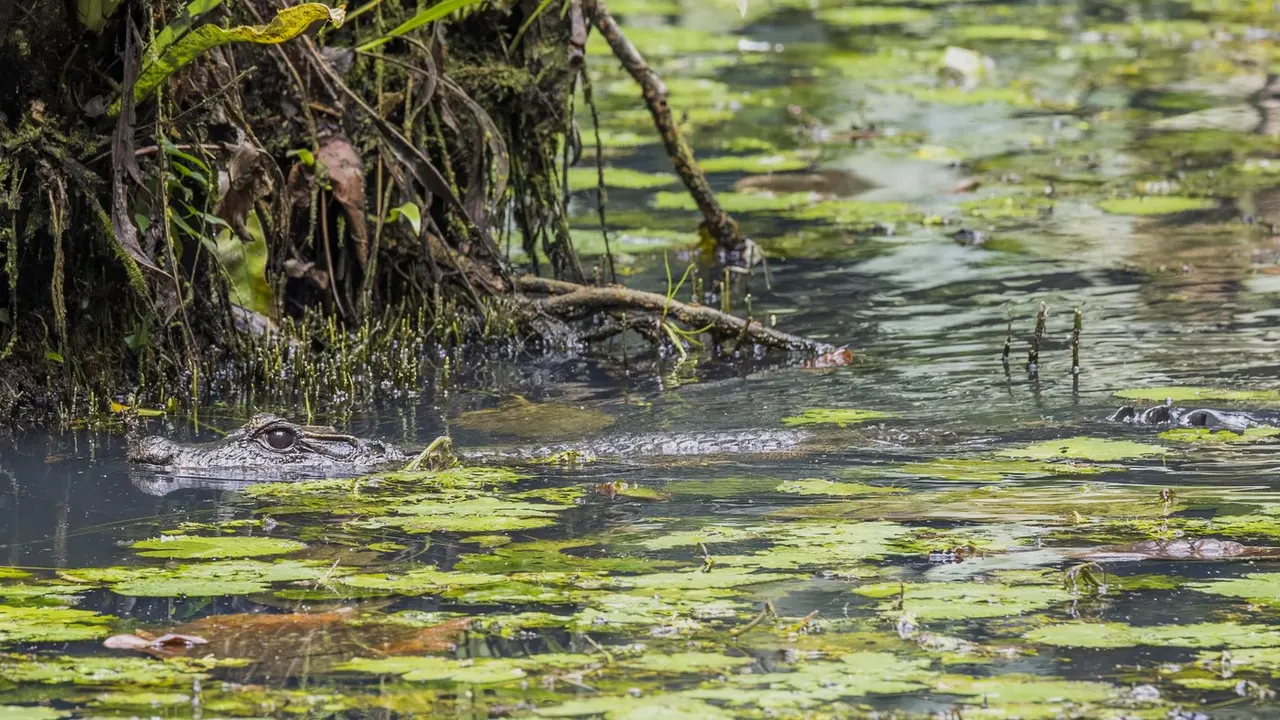
A population of dwarf crocodiles living in the Abanda caves of Gabon has been filmed successfully hunting bats for the first time, according to footage released on October 1, 2026. While scientists have known since 2010 that these cave-dwelling reptiles consumed bats based on stomach contents, the actual predatory behavior had never been witnessed by human observers because the animals cease hunting in the presence of people.
What do cave-dwelling dwarf crocodiles eat?
The cave-dwelling dwarf crocodiles (Osteolaemus tetraspis) in the Abanda system subsist on a diet almost entirely composed of cave-dwelling organisms, specifically cave crickets and bats. According to a study published by Matthew Shirley and colleagues in the African Journal of Ecology in September 2016, this menu differs drastically from that of their relatives in the surrounding rainforest, whose stomachs contained freshwater crustaceans and insects. The research also found that the cave-dwelling juveniles had significantly better body condition—essentially appearing more well-fed—than their forest counterparts, likely due to the abundance of prey in the limestone tunnels.
How was the bat-hunting behavior of the crocodiles finally recorded?
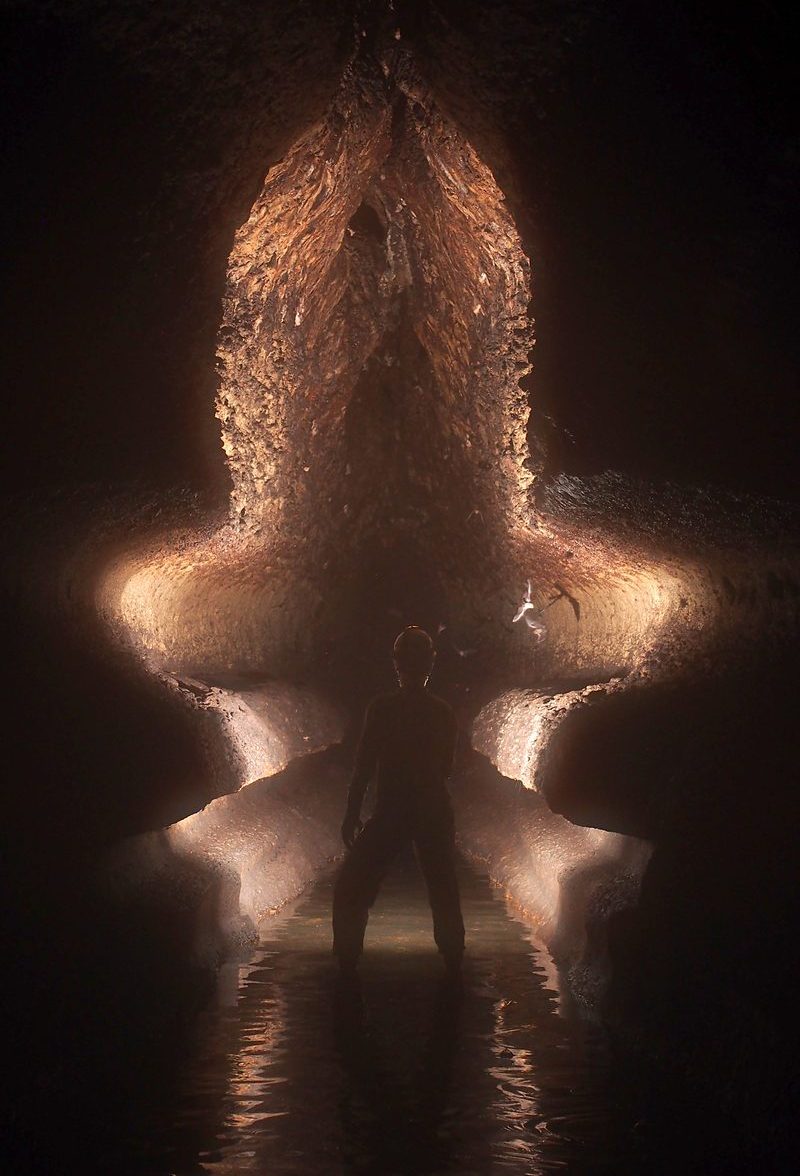
The bat-hunting behavior of the Abanda crocodiles was recorded by removing human presence from the environment and using a remote-controlled infrared camera system managed from a surface hut. Field director Lillian Todd-Jones and her team, working on the National Geographic docuseries Africa: Earth's Wild Home, installed specialized lighting that remained invisible to the crocodiles. Previous attempts to observe hunting over 16 years had failed because the crocodiles would not act naturally while researchers like Matthew Shirley were inside the caves, which are filled with treacherous mud and layers of bat guano. The new footage shows the crocodiles performing stealthy ambushes, lunging to snatch bats that have either fallen to the ground or are emerging from the cave at dusk.
Why do some of these cave crocodiles have orange skin?
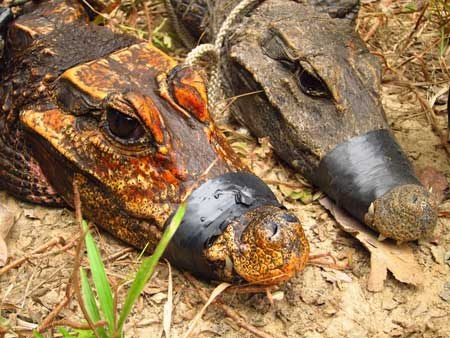
The orange skin observed in older male cave crocodiles is not a genetic trait but a result of chemical bleaching caused by the alkaline environment of the cave water. Because the crocodiles spend years submerged in water saturated with bat guano, the high levels of urea act as a corrosive agent on their skin. Matthew Shirley has compared this process to the industrial tanning of crocodile hide for leather goods. While most dwarf crocodiles are typically black, this environmental tanning transforms the cave residents into a striking bright orange, distinguishing them visually from their dark-grey relatives in the forest.
Are the Abanda cave crocodiles a separate species?
The Abanda cave crocodiles represent a genetically distinct population that is increasingly isolated from the forest-dwelling dwarf crocodiles, though they are not yet classified as a separate species. Genetic testing confirms they form a unique lineage that only breeds within the cave community, though they must exit to the surface during the rainy season to lay eggs in decaying vegetation, as they cannot nest inside the caves. This population is part of a broader taxonomic shift led by Shirley, who in 2014 published a study dividing the African dwarf crocodile into three distinct species based on genetic evidence.
What is the conservation status of the Abanda crocodiles?
The dwarf crocodile is currently listed as "Vulnerable" on the IUCN Red List, but the Abanda population faces specific risks as the caves sit outside of Gabon's protected areas. In West and Central Africa, tens of thousands of dwarf crocodiles are hunted annually for the commercial bushmeat trade. While the narrow, difficult-to-navigate tunnels of Abanda provide a natural defense against hunters, Shirley notes that the Gabonese government is still in the process of declaring the area a special reserve to ensure their long-term survival.
Notes and Sources
- Josh Gabbatiss (2016). "Weird orange crocodiles found gorging on bats in Gabon's caves", New Scientist.
- Ben Goldfarb (2026). "The Huge Impact of Africa's Teeny-Tiny Crocs", National Geographic.
- Patrick Pester (2026). "Watch the world's smallest crocodiles snatch bats in their hidden underground lair", Live Science.
- Shirley, M. H., et al. (2017). "Diet and body condition of cave-dwelling dwarf crocodiles in Gabon", African Journal of Ecology.
- Eigen Radar (2026). "Gabon cave crocodiles' bat hunt appears on film for the first time".
- Shirley, M. H., et al. (2014). "Rigorous approaches to species delimitation have significant implications for African crocodilian systematics", Proceedings of the Royal Society B.
- Florida International University News (2026). "FIU researcher to be featured on National Geographic's new docuseries".