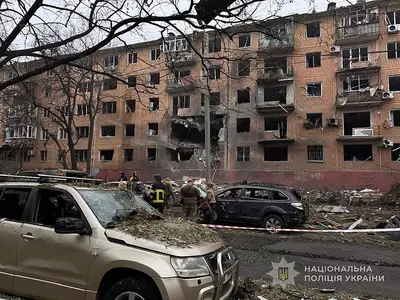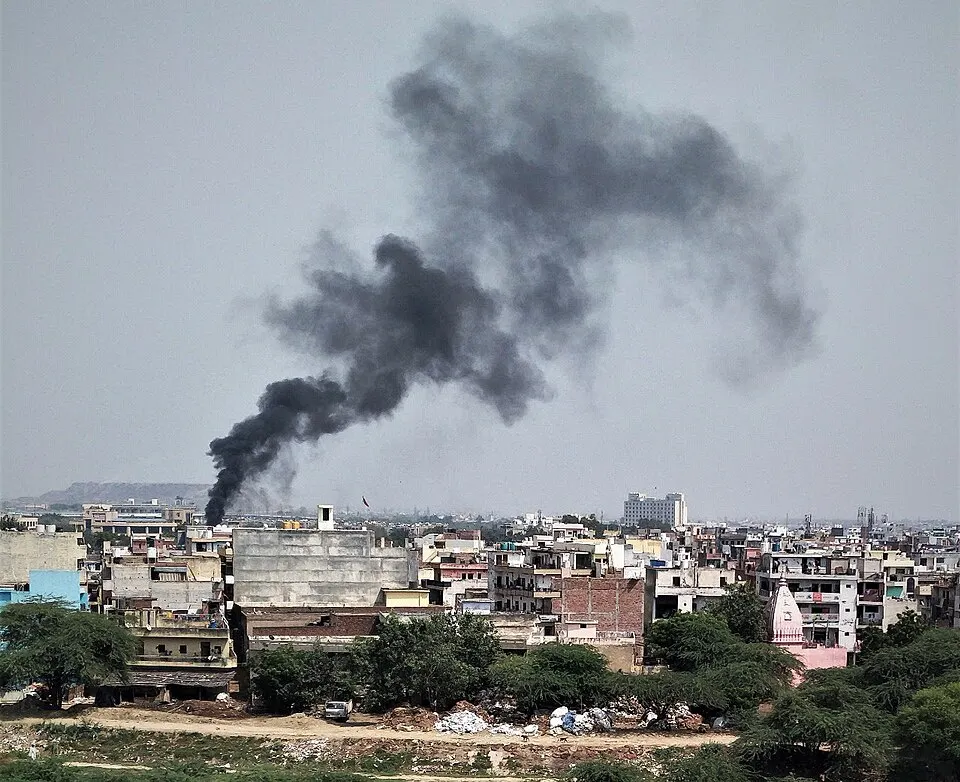
Russian forces launched a massive late-night ballistic missile barrage across Ukraine on November 16, striking strategic transportation bridges in Kyiv and damaging energy and industrial infrastructure in multiple major cities. Emergency response teams and municipal officials in the capital reported immediate disruptions to municipal heating and water networks after impacts hit the North and South bridges spanning the Dnipro River. The broad aerial bombardment extended into the early hours of November 17, triggering air raid warnings and heavy explosions across central, eastern, and southern Ukrainian urban centers.
Which regions were targeted in the widespread attacks?
Russian missile strikes extended far beyond the capital, targeting heavy industrial facilities, residential zones, and vital transport routes across several Ukrainian Oblasts. In Kyiv, a metropolitan center of approximately 3 million residents straddling the Dnipro River, Mayor Vitali Klitschko confirmed that air defense systems engaged incoming targets starting at 11:34 p.m. on November 16. Within half an hour, impacts damaged critical utility systems, causing immediate water and heating outages in several urban districts. Ukrainian journalists on the ground reported hearing some of the loudest detonations in recent months, with thick smoke rising above the city skyline as further blasts shook the capital well into November 17.
Outside the capital, multi-city impacts caused significant civilian injuries and industrial destruction. In the south-eastern city of Zaporizhzhia, an industrial infrastructure site sustained six missile strikes, according to regional military co-chair Ivan Fedorov and local administration official Mykhailo Semikin. In central Ukraine, three people sustained injuries when missiles struck the city of Smila in Cherkasy Oblast, as confirmed by regional governor Ihor Taburets. Additional explosions hit Kharkiv's Kholodnohirskyi district, as well as the cities of Dnipro and Pavlohrad. Shortly following the capital strikes, Sergey Aksyonov, the Russian-appointed official in occupied Crimea, stated that Ukrainian forces launched a retaliatory strike on the Kerch Bridge, forcing authorities to suspend cross-strait traffic.
"We have information that the Russians are preparing a strike," Ukrainian President Volodymyr Zelensky warned shortly before the bombardment, urging citizens to heed air raid alerts.
How are evolving missile technologies impacting Ukraine's air defenses?
Ukraine's air defense capability faces unprecedented pressure from advanced Russian missile technology and severely depleted interceptor stockpiles. According to reporting by The New York Times, Ukrainian military forces have been forced to strictly ration interceptor ammunition for advanced Patriot defense systems. Yuriy Ihnat, head of the Communications Department of the Ukrainian Air Force Command, told the outlet that Ukrainian air defense teams were forced to abandon standard defensive protocols that previously deployed at least two interceptor missiles per incoming aerial threat. The strategic supply bottleneck leaves urban centers increasingly vulnerable to complex aerial salvos.

The defensive crisis is further complicated by technical upgrades to Russia's ballistic arsenal. According to technical details published by Vietnam.vn, Russian forces are deploying modified 9M723 ballistic missiles from Iskander-M systems equipped with dual-homing guidance systems. Defense tech advisor Serhii Beskrestnov noted that despite Kyiv's dense electronic warfare networks, these missiles utilize active radar and optical correlation seekers—specifically the 9B918 radar and 9E436 optical systems—that independently match terrain imagery in 3D during their final descent, rendering GPS jamming ineffective and dramatically improving strike precision against key infrastructure.
Why are Kyiv's river bridges critical to the national war effort?
Kyiv serves as Ukraine's primary political, industrial, and transportation hub, home to roughly 3 million residents out of a national population estimated by World Bank data at 39.0 million people in 2025. Because the capital is physically divided by the Dnipro River, its major bridge crossings—including the Northern and Southern bridges—are vital arteries for both civilian transit and military logistics across northern Ukraine. Similar strikes in early October previously damaged the road surfaces on both bridges, paralyzing urban traffic and interrupting municipal supply routes.
The economic disruption comes at a sensitive time for Ukraine's national economy, which recorded a gross domestic product of $214.2 billion in 2025 alongside a 12.7% annual inflation rate, according to World Bank figures. Attacks on vital transport corridors directly aggravate local logistics, disrupt essential utility distribution, and place continuous strains on emergency repair budgets as the country faces harsh winter conditions.
What happens next?
Several crucial operational and diplomatic developments remain unconfirmed in the immediate aftermath of the strikes:

1. Ukrainian emergency services have not yet published a final tally of total casualties or detailed structural assessments regarding the long-term usability of Kyiv's North and South bridges.
2. International military delegates are convening on November 17 at NATO headquarters in Brussels for the 37th meeting of the Ukraine Defense Contact Group in the Ramstein format, co-hosted by Britain and Germany, where urgent air defense resupply will dominate the agenda.
3. Ukrainian intelligence agencies report that Russia continues to receive dozens of ballistic missiles monthly from North Korea while scaling up domestic assembly lines, with Prime Minister warnings indicating Moscow could launch up to 6,500 jet-powered Shahed-type drones during the month of November.
Sources: This report draws on coverage by The Kyiv Independent, Odessa Journal, UNITED24 Media, Around Prague, Vietnam.vn, Apa.az, NV. The wording is our own.