Following a complex, seven-stage operation, Ukraine executed an unprecedented missile and drone attack on the Kerch Strait bridge, causing a partial collapse of the strategic structure that links Russia to the occupied Crimean Peninsula. President Volodymyr Zelensky praised the long-planned strike as a critical victory, while the Kremlin insisted the bridge would be restored and returned to service. The operation delivers a severe logistical and symbolic blow to Russian President Vladimir Putin, coming just days before scheduled meetings with U.S. President Donald Trump and Chinese leader Xi Jinping.
To understand why this specific span of concrete and steel carries such immense weight, you have to go back to the geography and strategic rivalries that have shaped the Crimean Peninsula for millennia. Crimea, almost entirely surrounded by the Black Sea and the Sea of Azov, sits at a historical crossroads between classical empires and the Eurasian steppe. For centuries, its position made it both a coveted prize and a isolated fortress, connected to mainland Ukraine only by the narrow Isthmus of Perekop to the northwest.
A Crossroads of Empires
Historically known as the Tauric Peninsula until the early modern period, Crimea's southern fringe was colonised by the ancient Greeks before being absorbed by the Roman and Byzantine Empires. Maritime trading outposts established by Genoa eventually gave way to conquest by the Ottoman Empire. Throughout these ancient and medieval transitions, the peninsula's rugged interior remained a shifting domain for various nomadic steppe cultures.
Because the region was virtually surrounded by water, controlling access to Crimea required controlling its maritime chokepoints. To the east, the narrow Strait of Kerch separated the Crimean landmass from the Taman Peninsula in Krasnodar Krai. For centuries, this stretch of water served as a formidable barrier, keeping the peninsula geographically distinct from the Russian mainland to the east.

The Modern Annexation and the Span
The geopolitical dynamic shifted dramatically in 2014 when Russian forces occupied and annexed Crimea from Ukraine, an action that remains internationally condemned and unrecognised. Domestically, the peninsula relies on regional infrastructure and links to the population of 2.4 million, anchored by its largest city, Sevastopol. To solidify Moscow's control and physically bind the occupied region to the Russian state, Vladimir Putin ordered the construction of a permanent cross-strait connection.
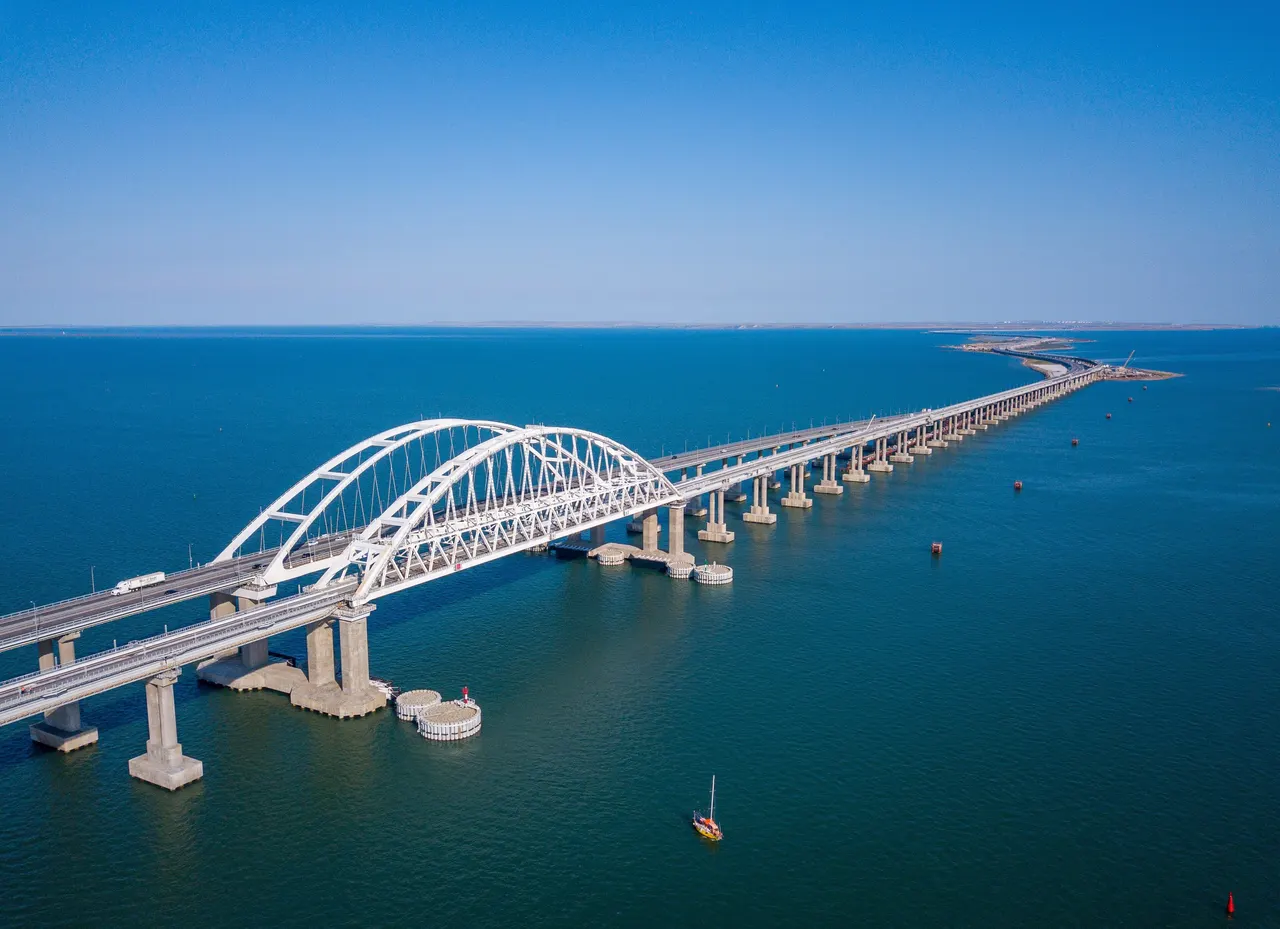
"To the east, the Crimean Bridge, constructed in 2018, spans the Strait of Kerch, linking the peninsula with Krasnodar Krai in Russia."
Opened by Putin in 2018, the Crimean Bridge served a dual purpose. Logistically, it provided a direct military and civilian transport artery that bypassed Ukrainian land routes entirely. Politically, the massive engineering project stood as the ultimate physical manifestation of Russia's territorial claims, designed to make the annexation appear permanent and irreversible.
The Symbol of Occupation in the Crosshairs
When Russia launched its full-scale invasion of Ukraine, the Kerch Bridge instantly transformed into the primary supply corridor for Russian forces operating across southern Ukraine. Tank trains, ammunition convoys, and troop movements flowed continuously across the Strait of Kerch. Consequently, destroying or disabling the structure became a primary strategic objective for Kyiv.

The latest overnight strike underscores how central the bridge remains to the broader conflict. By successfully penetrating one of Russia's most heavily defended assets, Ukraine has demonstrated that Moscow's physical link to Crimea remains vulnerable to sustained precision attacks.
What History Suggests Comes Next
The partial collapse of the Kerch Bridge highlights a recurring historical reality: physical infrastructure built to cement territorial conquest often becomes the primary target of counter-offensives. While Russia maintains that the bridge will be repaired, the damage severely disrupts Moscow's logistical capabilities at a sensitive diplomatic moment.
If history offers a guide, the struggle over Crimea will continue to pivot on access and isolation. Without a secure, operational bridge across the Kerch Strait, Russia's ability to supply its military positions and maintain its grip on the peninsula faces its most severe strain since the 2014 occupation began.
Sources: This report draws on coverage by BBC News, The Guardian, The New York Times, TIME, CBS News. The wording is our own.